We have all been there: It is 4:30 AM, you have cleared security, and you are exhausted. You are surrounded by closed storefronts. The lights are on, the terminal is heated, and thousands of people are milling around - but you can’t buy a cup of coffee.
This isn’t just poor customer service; it is a symptom of a fundamentally broken economic model.
Airports are currently facing a crisis of “Revenue Leakage.” While flight schedules operate 24/7, the commercial infrastructure that serves passengers often shuts down for 6 to 8 hours every night. The reason? The “Airside Premium” has made human staffing during these hours mathematically impossible.
A new economic analysis reveals why the future of airport retail isn’t about luxury boutiques, but about autonomous, frictionless infrastructure.
The “Airside Premium” Explained
Why does a cup of coffee cost more at the airport? It’s not just “captive audience” pricing; it’s the cost of doing business in a federal security zone.
The cost of labor in aviation is not just the hourly wage; it is the “fully loaded” cost of security.
- The Bureaucracy Tax: Every employee needs a SIDA (Security Identification Display Area) badge. The fingerprinting, FBI checks, and threat assessments cost hundreds of dollars per hire.
- The Churn Tax: With turnover rates often exceeding 50%, a concessionaire with 20 staff might spend $3,000–$5,000 annually just on access fees before paying a single dollar in wages.
When you factor in “Living Wage” ordinances (mandated at hubs like SFO and JFK) and night-shift differentials, the cost to staff a store at 3:00 AM far exceeds the revenue from the few dozen passengers buying water and gum. The “rational” business decision is to close.
The Economic Black Hole
This creates an “Economic Black Hole” between 10:00 PM and 5:00 AM.
- The Cost: The airport is still paying to light, heat, cool, and secure the terminal.
- The Loss: Passengers who would have spent money are forced to keep it. This isn’t deferred revenue (they won’t buy two coffees when they land); it is evaporated revenue.
Roland Berger data indicates that while retail spend per passenger is dropping (due to e-commerce price transparency), Food & Beverage spend is growing. Passengers can buy headphones on Amazon, but they can’t download a sandwich. The demand is inelastic, but the supply is artificially constrained by labor costs.
The Automation Fix: Critical Infrastructure
The solution is to decouple revenue from human presence. Automated retail is no longer a “novelty”; it is the only way to make the night shift profitable.
1. The Throughput Engine: “Just Walk Out”
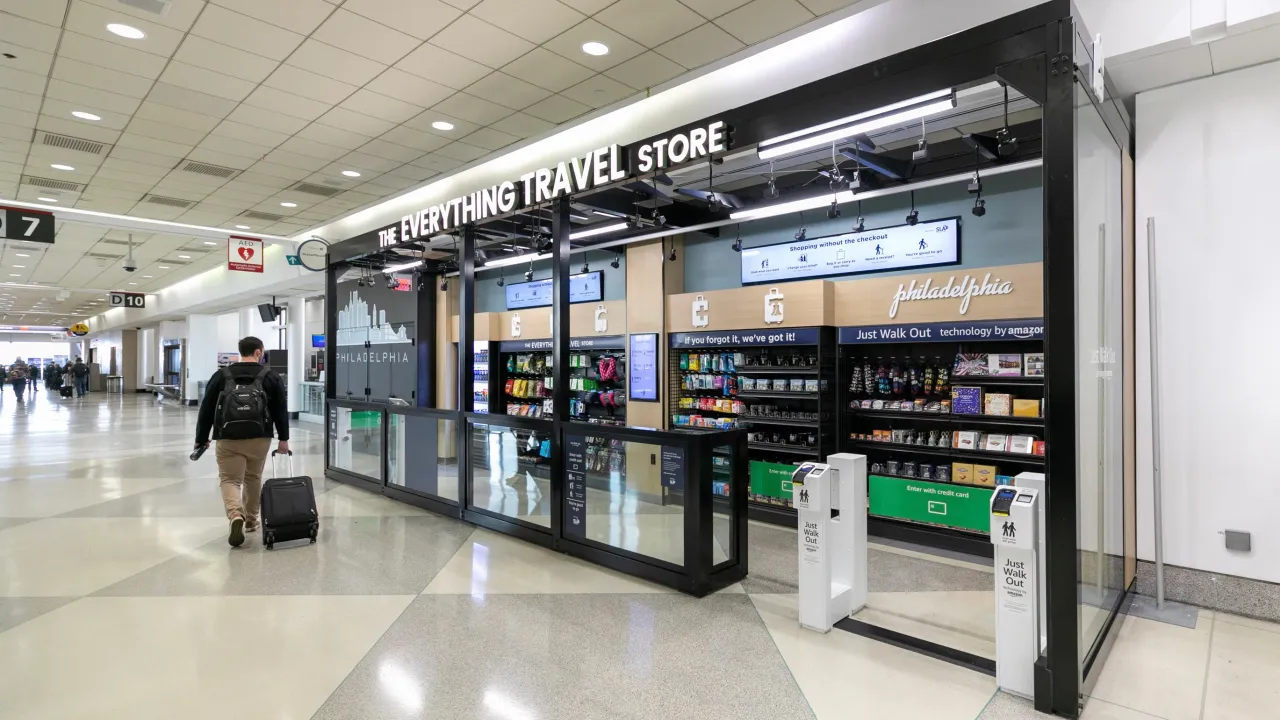
Amazon’s Just Walk Out technology (used by Hudson Nonstop) removes the transaction bottleneck.
- No Lines: In a traditional store, throughput is capped by the speed of the cashier. In a frictionless store, throughput is limited only by floor space.
- Surge Capacity: When a wide-body jet offloads 300 passengers, a traditional store creates a line, causing “queue anxiety” and abandonment. A frictionless store absorbs the surge instantly.
- Zero Marginal Labor: Once the store is built, the cost to keep it open from 2:00 AM to 4:00 AM is essentially just electricity.
2. The Space Arbitrage: Robotic Kiosks
Airports sell real estate. A robotic coffee bar like Cafe X or Costa’s BaristaBot occupies just 40 square feet - fitting under escalators or in narrow corridors where a full cafe could never fit.
- Efficiency: These units can generate $300,000 in revenue with margins approaching 60%, turning “dead space” into high-yield acreage.
The “Airport 4.0” Vision
The airport of the future will be Hybridized.
- High-Touch Zones: Luxury retail (Rolex, Chanel) will remain human-centric. You want a person to sell you a $5,000 watch.
- Zero-Touch Zones: Convenience and F&B will be 100% automated. You do not need a human to sell you a $5 water bottle.
This shift isn’t just about robots; it’s about aligning the commercial model with the operational reality. By treating automated retail as a utility - always on, just like the runway lights - airports can finally close the gap between the 24-hour flight schedule and the 18-hour retail day.
References
- Roland Berger: Commercial effectiveness at modern airports.
- International Airport Review: Airports face financial challenges despite air traffic rebound.
- GreyMatter: Stop Revenue Leakage in Airport Retail.
- TSA: Exit Lane Staffing Cost-Benefit Analysis.
- GetZippin: The Impact of Checkout-free from Airports to NFL.
- BizBuySell: Cafe X - Robotic Coffee Bar Business Opportunity.
Read next: Robot baristas for airports and transit hubs — sizing to the peak rather than the daily total, and what concession fees do to the economics. Or start with the robot barista buyer’s guide.