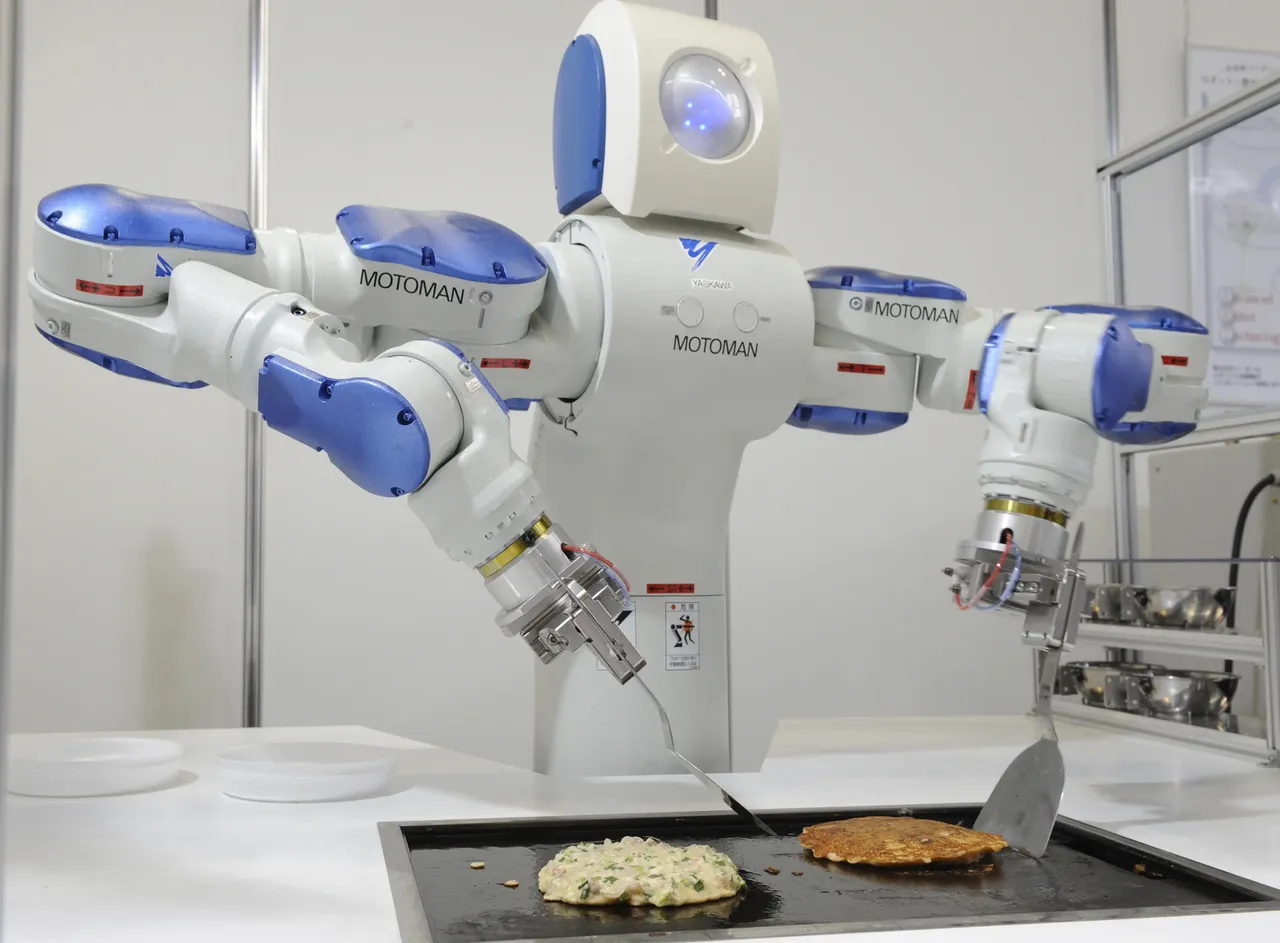
For the last decade, food robotics has been stuck in a “circus” phase. We’ve all seen the viral videos: a robotic arm awkwardly dancing while pouring a latte, or a “futuristic” vending machine making a salad behind glass. They looked great on Instagram, but in the harsh reality of a commercial kitchen, most of them failed.
Why? Because they were built like toys, not tanks.
A new shift in industrial standards reveals that the era of the “consumer gimmick” is ending. It is being replaced by a new class of industrial-grade equipment designed not for novelty, but for operational survival.
The Gimmick vs. The Gear
The biggest mistake early food robots made was prioritizing aesthetics over robustness. There is a stark engineering divide between the prototypes seen at trade shows and the machines that can actually survive a 12-hour shift. The difference often comes down to invisible components like the motors and sensors.
- The Muscles (Motors): Gimmicky robots often use Stepper Motors. They are cheap and quiet, but they move “blindly” using open-loop control. If a joint jams on a frozen burger patty, the motor doesn’t know and keeps trying to move, potentially ruining the food. Industrial robots use Servo Motors with closed-loop feedback. They “feel” resistance and correct errors in real-time, ensuring precision even when things go wrong.
- The Brains (Sensors): A basic robot assumes a perfect world where ketchup is always the same thickness. But in reality, viscosity changes with temperature. Industrial robots now use mass flow meters and computer vision to “watch” the food, adjusting the pour instantly if the sauce is running too fast or slow.
- The Skin (Materials): A shiny exterior isn’t enough. Many prototypes used “304 grade” steel, which eventually pits and corrodes when exposed to salty sauces or hot espresso. The new mandatory standard is 316L Stainless Steel, a medical-grade alloy containing molybdenum that resists the microscopic corrosion where bacteria hide.
The Silent Killer: Cleaning
The number one reason food robots fail isn’t because they can’t cook - it’s because they are a nightmare to clean.
Early entrants like Chowbotics’ Sally (a salad robot) failed mechanically because they required humans to spend hours manually cleaning and refilling canisters. The robot became a “net liability” because it took more time to maintain than it saved in labor.
The industry solution is CIP (Clean-in-Place). Borrowed from the dairy industry, CIP allows a robot to wash its internal pipes without disassembly. But the physics involved are intense.
To effectively scrub a pipe from the inside, water needs to create turbulence, specifically a Reynolds Number greater than 4000. This usually requires fluid velocities of over 1.5 meters per second - speeds that standard food dispensing pumps simply cannot reach.
Furthermore, engineers must design pipes with zero “dead legs” - stagnant branches where water doesn’t flow. If a sensor creates a dead leg longer than twice its width ($L/D > 2.0$), bacteria will survive the wash cycle.
Surviving the Kitchen Hellscape
Commercial kitchens are hostile environments: hot, greasy, and humid. Early robots used “open-air” cooling fans, similar to a desktop PC. In a kitchen, these fans suck in flour, grease, and steam, coating sensitive electronics in a conductive sludge that causes short circuits.
The new standard is NEMA 4X or IP69K. This means the robot is a sealed, watertight vault. It uses internal heat exchangers to stay cool without ever breathing in the outside air. You could hit these robots with a high-pressure steam jet, and they would keep working.
Boring is Beautiful
We are moving away from the “Jetsons” aesthetic. Operations managers don’t care if a robot has a face; they care about OEE (Overall Equipment Effectiveness). They care that the machine runs for 60,000 hours without a breakdown.
A prime example of this evolution is Miso Robotics. Their early “Flippy” unit was a cart that took up valuable aisle space. Realizing this was a nuisance, they evolved it into an overhead rail system that hangs from the ceiling, completely out of the way. It silently fries food using AI vision to know exactly when the fries are done, focusing on throughput rather than theatrics.
The future of food robotics isn’t a humanoid butler. It is a silent, hygienic box that produces the perfect espresso or burger, 24 hours a day. The winners in this space won’t be the ones with the best marketing - they’ll be the ones with the best welds, the best seals, and the most boringly reliable motors.
References
- Primary Source: Engineering Standards for Commercial Food Robotics: A Technical Deep Dive into Industrial Reliability (Internal Research Document).
- Omron Automation: A quick guide to collaborative robot safety, accessed Jan 2026.
- UL Standards: UL 3300 Outline of Investigation for Consumer, Service, and Education Robots.
- NSF International: NSF/ANSI 169: Special Purpose Food Equipment and Devices.
- Miso Robotics: Next-Generation Flippy Fry Station, accessed Jan 2026.
- Quartz: An army of robot baristas could mean the end of Starbucks as we know it, accessed Jan 2026.